The Epitaphios is an ornate embroidered icon depicting the body of Christ laying on the Tomb. The word Epitaphios comes from a Greek expression meaning “on the tomb” (= επί του τάφου).
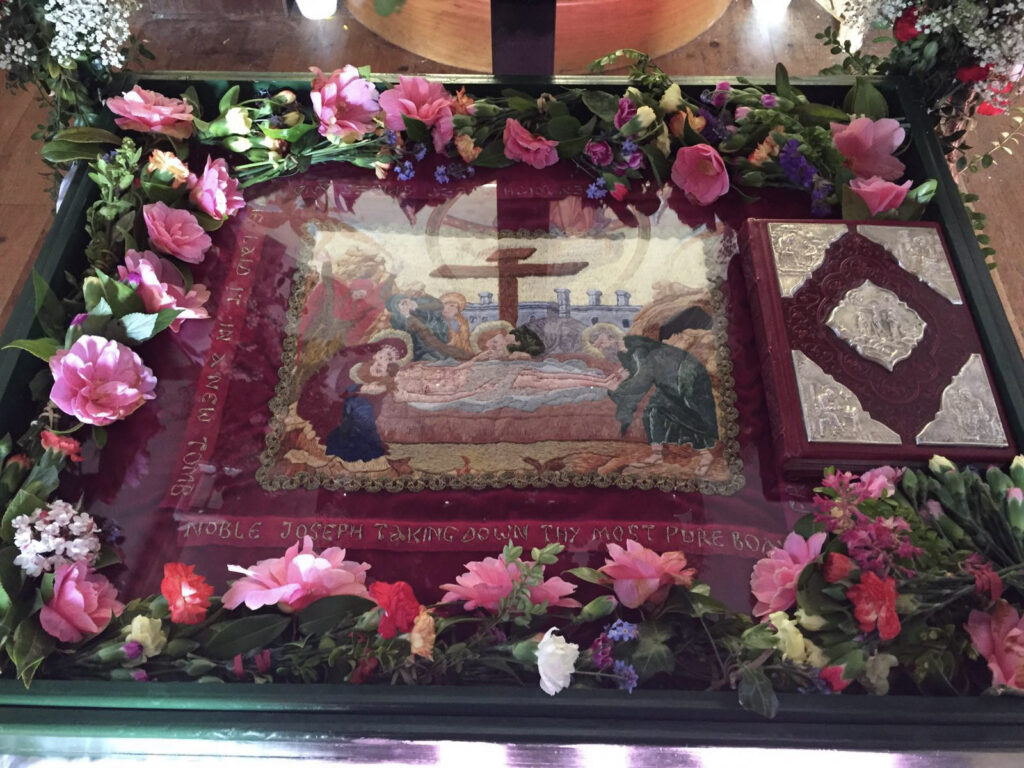
On the Epitaphios, Christ can be alone, or flanked by angels, or included in the iconographic type known as the “Lamentations over the Tomb” (Epitaphios Threnos – Επιτάφιος Θρήνος in Greek).
The icon type of the “Lamentations over the Tomb” is based on the Gospel account (John 19:38-42). It shows the dead body of Christ lying supine on top of the Tomb. The Theotokos, broken-hearted and weeping, is sitting or kneeling, holding the head of Her Son on Her lap, embracing Him. Behind her, the other holy women, including St. Mary Magdalene, are also lamenting. On the opposite side, we see Joseph of Arimathea venerating Christ’s feet, and close to him Nicodemus. St. John the Beloved Disciple is also shown, weeping and often kissing our Lord’s hand. Angels can additionally be present, bowing down in reverence. In some variations they are wearing deacon’s vestments or they are holding liturgical fans.
On Holy Friday morning, before the Great Vespers (the service of the Apokathelosis), a wooden construction symbolizing the Tomb of Christ and called “Kouvouklion” or “Sepulcher” is lovingly and painstakingly decorated with flowers, usually by the young women of the parish.
During the Great Vespers, the Epitaphios is ceremoniously placed inside the decorated Sepulcher. The priest sprinkles the icon with rose-water and covers it with flower petals and whole flowers, then he places the Gospel Book on top of it.


