November 3rd

On this day we commemorate our Holy Mother Winifred, Virgin Martyr and Wonderworker of Holywell.
Verses: Winifred again in God asleep has fallen, But this time awaits the common Resurrection. Winifred before the Trinity stood on the third day before the Nones of November.
Our Holy Mother Winifred, known in Welsh as Gwenfrewi, was born around 610 in North Wales. Her father, Tyfid, was a chieftain subject to King Cadfan, and her mother, Wenlo, came from the royal house of Powys. Her uncle was Saint Beuno, one of the greatest Welsh saints. From earliest childhood, Winifred resolved to dedicate her life to Christ in virginity and prayer.
Providentially, Saint Beuno came to her family and established a church and school at one of her father’s manors in the Sechnant valley. Under his guidance, Winifred grew into a devout maiden, rising early for church and keeping vigil through the night. Though only a teenager, she was already wise in character and eager to learn.
One Sunday, while her parents attended Liturgy, a local prince named Caradog stopped at the manor. Smitten by her beauty, he demanded she go with him. When she refused, saying she was betrothed to Christ, she fled toward the church. Caradog pursued her and, catching her at the church door, beheaded her with his sword.
As her head touched the ground, the earth quaked and a great stream of water sprang forth, making its way toward the River Dee. Thus the Dry Valley became Trefynnon—Holywell. The water appeared crimson-stained, had the fragrance of incense, and healed both humans and animals.
Saint Beuno left the altar, picked up the girl’s head, and pronounced God’s judgment upon the unrepentant Caradog, who fell down dead and disappeared like wax before fire. Beuno then fitted the head to the body, breathed into its nostrils, and returned to complete the Liturgy. After the congregation prayed earnestly, Beuno concluded: “Lord Jesus Christ, let her soul, restored to her body, prove You Lord of body and soul alike.” The dead girl rose up as if from sleep, forever bearing a thin white scar around her neck.
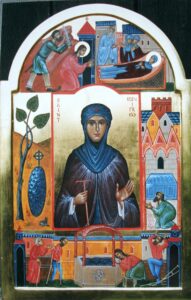
After her resurrection, Winifred made a pilgrimage to Rome and received the Consecration of Virgins. She settled at Holywell, where many young women joined her as nuns. She proved a wise superior, and many came to live near her, so that Holywell became a town.
After Saint Beuno’s death in 640, Winifred was called to Gwytherin, where she succeeded Tenoi as Abbess. The Brittanic church held a synod where she was greatly admired and called “White Winifred” for her wisdom. People came from all Wales seeking her guidance. Robbers repented when they met her, the sick were healed, and the sorrowful left in joy.
When the Lord Jesus announced her impending death, she exhorted her sisters to never turn aside from the changeless good, then laid her spirit in the hands of God. Pilgrims flocked to her grave, and numerous miraculous cures were wrought by her intercession.
In 1138, after visions confirmed God’s will, her relics were translated to Shrewsbury Abbey with great signs and wonders. At Woolston, the cortège could not move until they washed the bones—whereupon a well sprang up. The translation brought this Welsh saint to wider veneration, and by the fourteenth century her feast was added to the calendar for all Britain.
At the Reformation, the shrine was destroyed, yet some relics survived. Despite persecution, pilgrimages to Holywell have continued unbroken from the seventh century to the present day—making it the oldest pilgrimage site in the British Isles in continuous use. Through Saint Beuno, God gave Saint Winifred the power to live again, and thus she is known as the Welsh Lazarus.
Through her holy intercessions, O Christ our God, have mercy on us and save us. Amen.
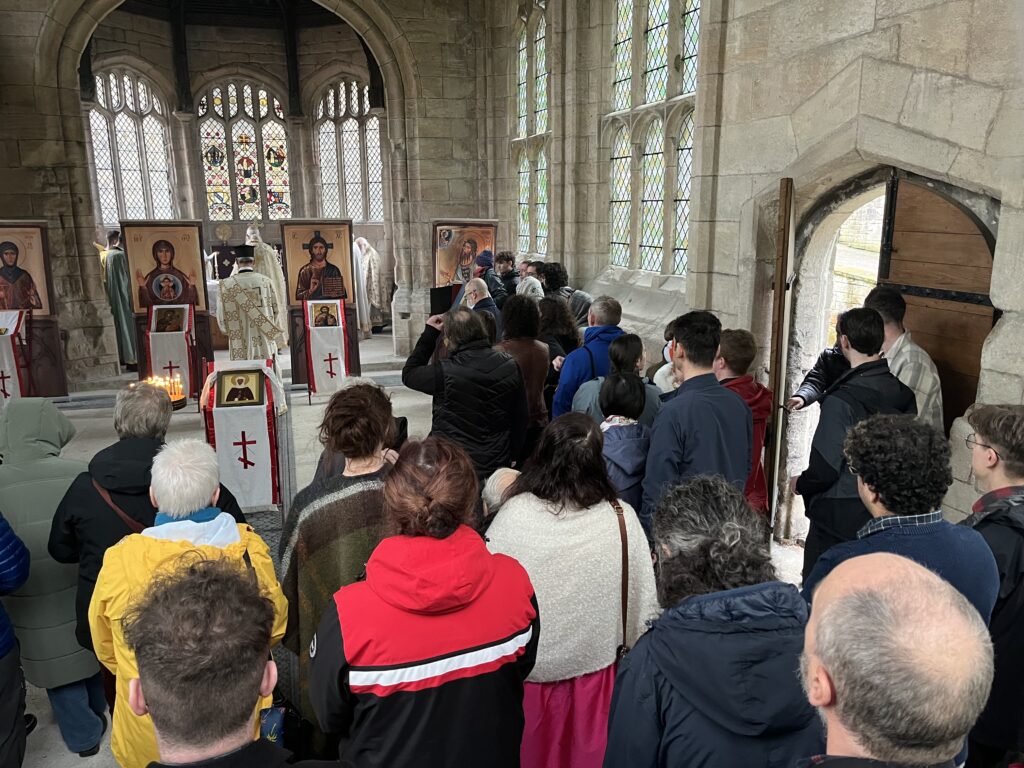
Troparion in Tone 4: All Wales does rejoice in you and praises, Blessèd Winifred, your life and struggles, and to your holy well which God has glorified, we have recourse and we ask you to ease our aches and heal our souls and our bodies as we cry out: Christ be praised who through you works mighty miracles and on those who extol you His great mercy grants.