Synaxarion
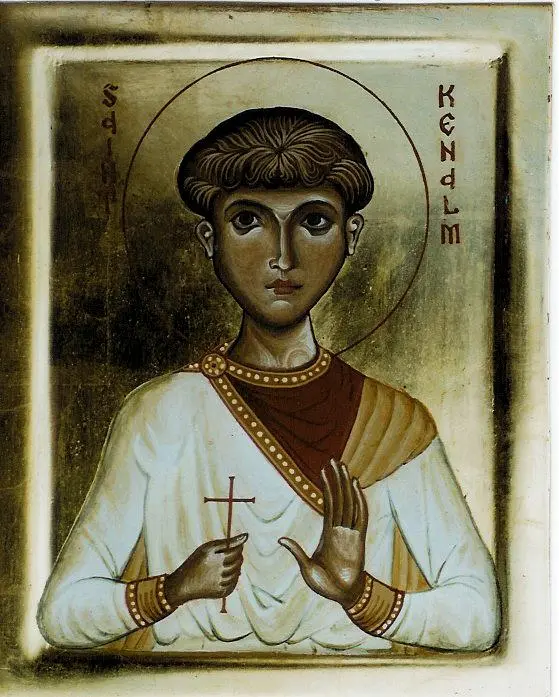
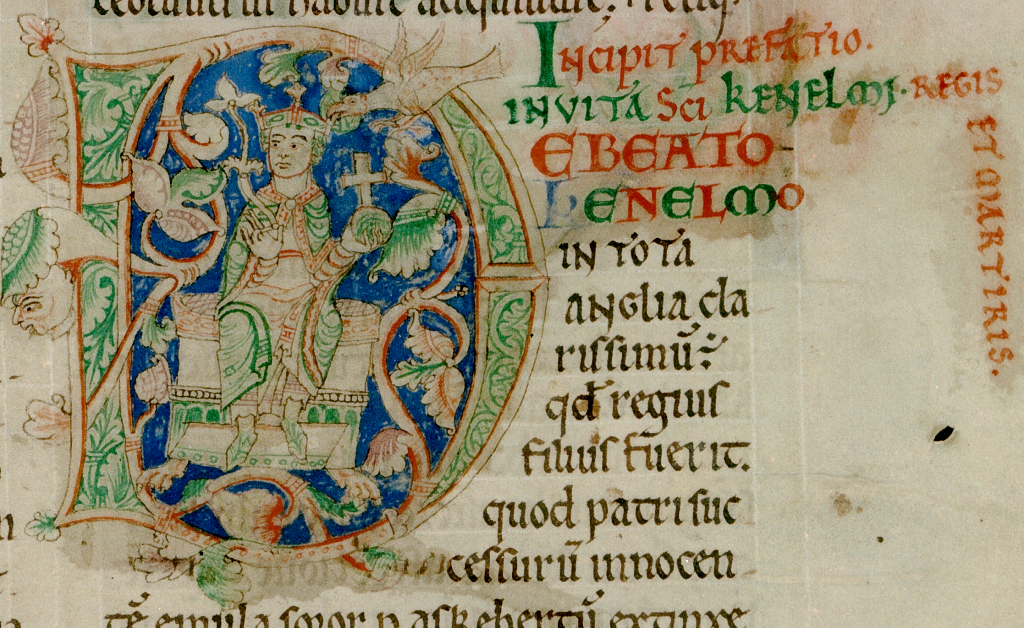
The holy passion-bearer Kenelm was the son of Kenwulph, King of Mercia and founder of Winchcombe Abbey, who died in 819 when the boy was only seven or nine years of age. His elder sister Quendryda, coveting the throne, plotted to have the young prince murdered by her lover Askobert, who was Kenelm’s own tutor. The treacherous man led the boy into the Clent Hills and beheaded him as the child sang the Te Deum. The murderer buried the body, and Quendryda banned all mention of the prince’s name throughout the kingdom.
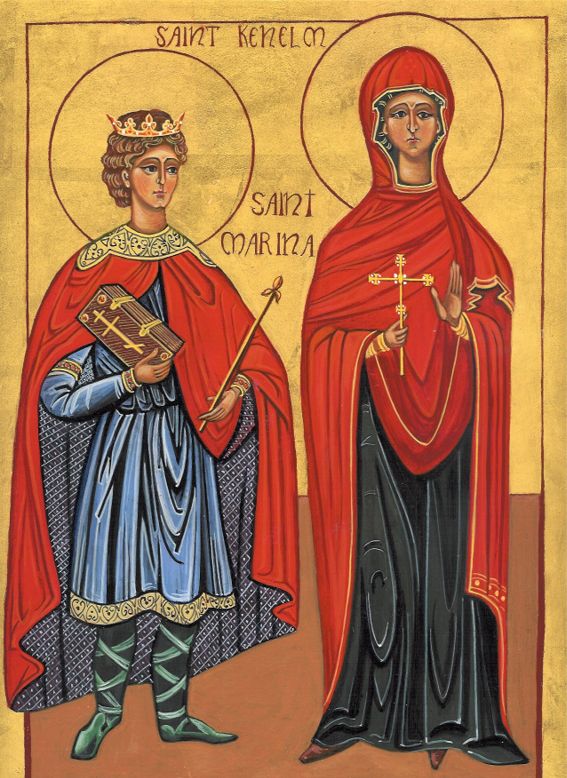
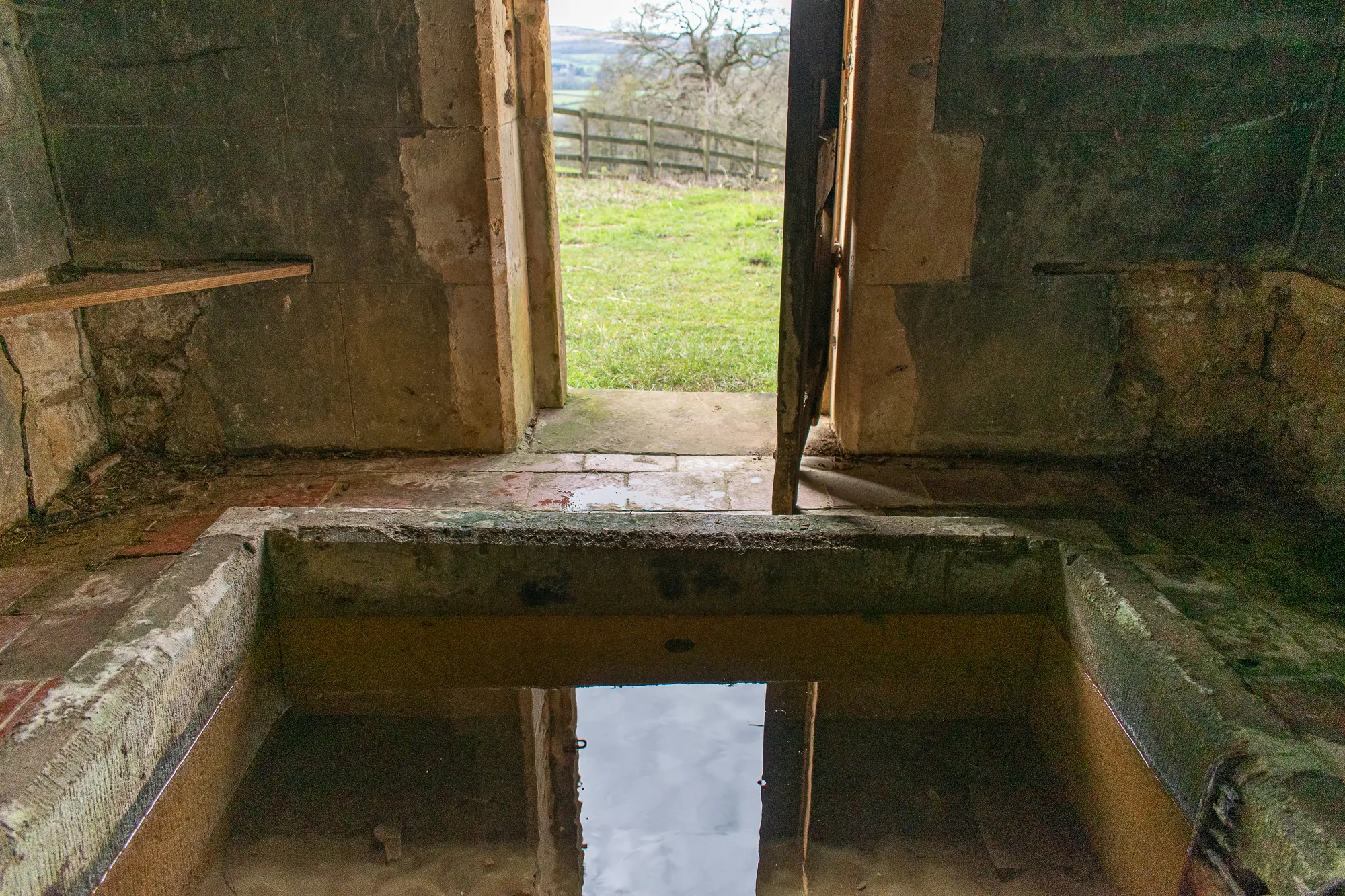
But Heaven took a hand in revealing the holy murder. News of Kenelm’s death was conveyed to the Pope in Rome by a heavenly dove, and the Archbishop of Canterbury was commissioned to investigate. Monks from the royal minster at Winchcombe were sent to search the hills, and as they travelled through the region of Romsley they saw a white pillar of light shining above a thicket. Digging there, they found the body of the young prince; as they lifted it, water sprang from the earth and flowed into a healing stream.
As the monks bore the holy body back towards Winchcombe, the abbey bells rang out without any human hand. Queen Quendryda was reading a psalter when the bells sounded; on being told the reason, she cried out that if it were true, both her eyes might fall upon the book — and forthwith they did. She and her lover were put to death.
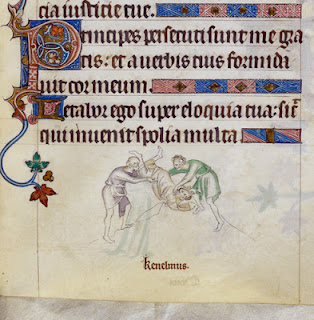
Saint Kenelm was buried at Winchcombe, and the miracles wrought at his tomb made it one of the most celebrated shrines in England, mentioned by Chaucer himself in the Canterbury Tales. The holy passion-bearer received the crown of martyrdom in the Clent Hills of Mercia, around the year 819.